Traffic orders

Traffic regulation orders

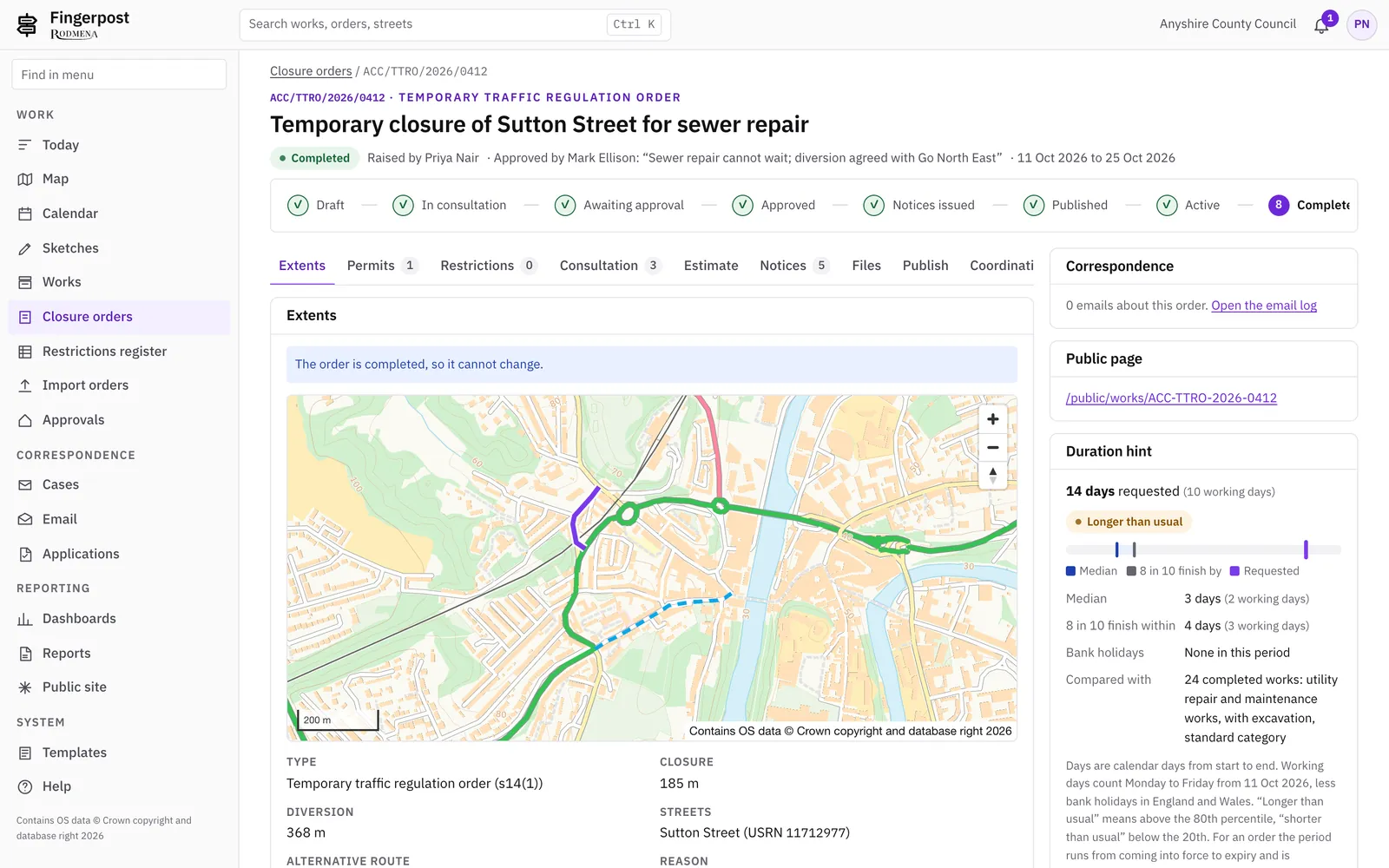
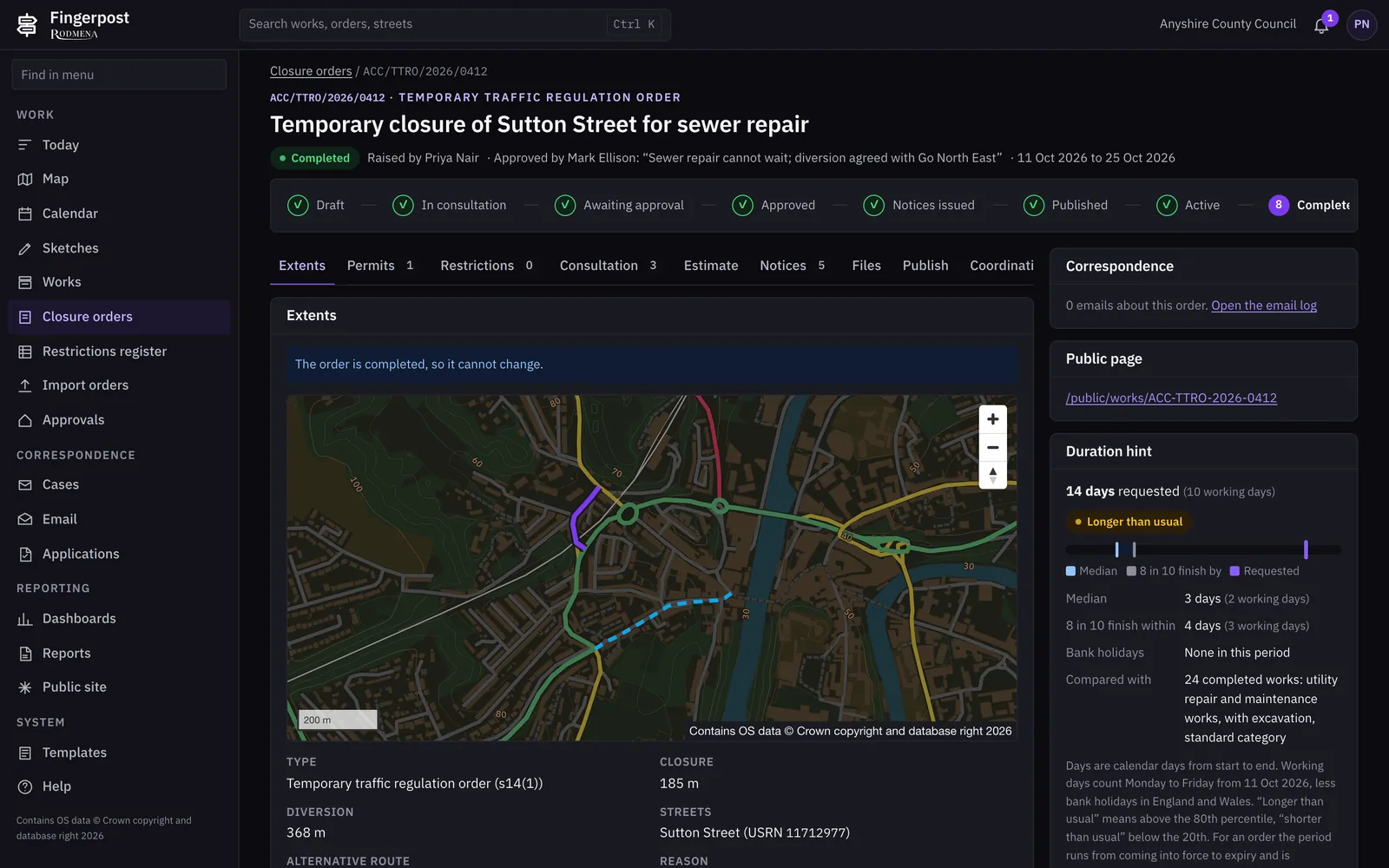
Traffic regulation officers draft an order with the legal checks for its kind shown as they write. Consultation, objections, the manager’s approval, the statutory notices and publication to D-TRO all happen in the order’s own record.

Traffic regulation orders

Officers draft temporary, experimental and permanent orders with the legal checks shown as they write. Each order goes through consultation, approval, notices and publication in one record.

  • Five kinds of order: temporary order, temporary notice, special event, experimental and permanent.
  • A five-step wizard that checks the rules for the kind of order as you go, such as the 18-month limit and seven days’ notice.
  • Closures and diversions drawn on the map, with the street references and lengths filled in.
  • Consultation letters, public comments and objections recorded against the order, with a decision on each objection.
  • An approvals inbox for managers. The officer who wrote an order cannot approve it.
  • Statutory notices generated from the order, each with its SHA-256 hash on the order’s Notices tab.
  • A register of restrictions in force on any date you choose.
  • Orders made before Fingerpost loaded from CSV, GeoJSON or D-TRO files, checked before anything is created.

Works to

  • Road Traffic Regulation Act 1984, s14(1), s14(2), s14(3) and s16A
  • SI 1992/1215 (temporary orders)
  • SI 1996/2489 (procedure regulations)
Fingerpost: Traffic regulation ordersFingerpost: Traffic regulation orders

D-TRO publication

Made orders are published to the Department for Transport’s D-TRO service in its 4.0.0 data model, checked against DfT’s published schema before they are sent.

  • Each record is checked against DfT’s JSON schema before it is sent, and the result shows on the order’s Publish tab.
  • The 3.4.1 record shape is kept as well, for services that still read it.

Works to

  • D-TRO data model 4.0.0
  • British National Grid (EPSG:27700) geometry

Cases and correspondence

Enquiries, emails and applications from residents and businesses land in Fingerpost and are linked to the works or order they are about.

  • Cases with an owner, tasks and a timeline that every officer on the case reads.
  • An email log of everything sent and received, with delivery events. A reply carrying a record’s tag is filed against that record.
  • Online applications for temporary orders, events, skips, scaffolds, hoardings, cranes and compounds.
  • Letter and email templates your team edits, with earlier versions kept.

See it with your own network

We show Fingerpost on a map of your area. Write to us and we will arrange a time.

Book a demonstration